From a Volcanic Valley to Your Palate: How Bean-to-Bar Chocolate Is Made in Costa Rica
Most people think of chocolate as something that arrives in a wrapper. Very few think about the months of work – the harvesting, fermenting, drying, roasting, grinding, and tempering – that happen before the wrapper even exists. Bean-to-bar chocolate makers do all of that themselves, under one roof, from a single known source. It is one of the most demanding and most transparent ways to make food. In Guanacaste, Costa Rica, it is also one of the most delicious.
What “Single-Estate, Single-Origin” Actually Means
These two phrases get thrown around a lot in the craft chocolate world. It is worth being specific about what they mean in practice.
Single-origin means the cacao comes from one country, or more specifically, one region or producer. It is the opposite of a commodity blend, in which beans from a dozen different countries are mixed to achieve a consistent, unremarkable average flavor.
Single-estate goes further. It means every bean in the bar came from one specific farm: one piece of land, one soil type, one microclimate, one set of trees. The flavor in the bar is the flavor of that place – not blended away, not corrected with additives, not masked with vanilla.
At Blue Valley Chocolate, both apply. The cacao in every bar grows on one farm: Finca Blue Valley, in Llano Azul, a valley in northern Costa Rica at the base of Tenorio Volcano, about 7 kilometers south of the town of Upala. Every bean is traceable to that specific piece of land. When you taste a bar from this farm, you are tasting one place, one harvest, one set of decisions made in a specific season. That is rarer than it sounds.
Why Upala Produces Exceptional Cacao
Upala sits in Costa Rica’s northern lowlands at roughly 100 meters above sea level. It is not a famous chocolate region yet. But the growing conditions there are genuinely exceptional.
Tenorio Volcano provides the backdrop, and its influence is felt in the soil. The valley floor at Llano Azul is slightly acidic, mineral-rich, and well-drained – exactly the conditions fine-flavor cacao prefers. Slightly acidic soil (pH 6.0 to 7.5) supports the microbial activity that feeds root development in cacao; the volcanic alluvial deposits provide the mineral profile that fine-flavor varieties need to express their genetic potential. The humidity is high year-round. The region receives reliable rainfall without the waterlogging that damages roots in lower-lying tropical areas.
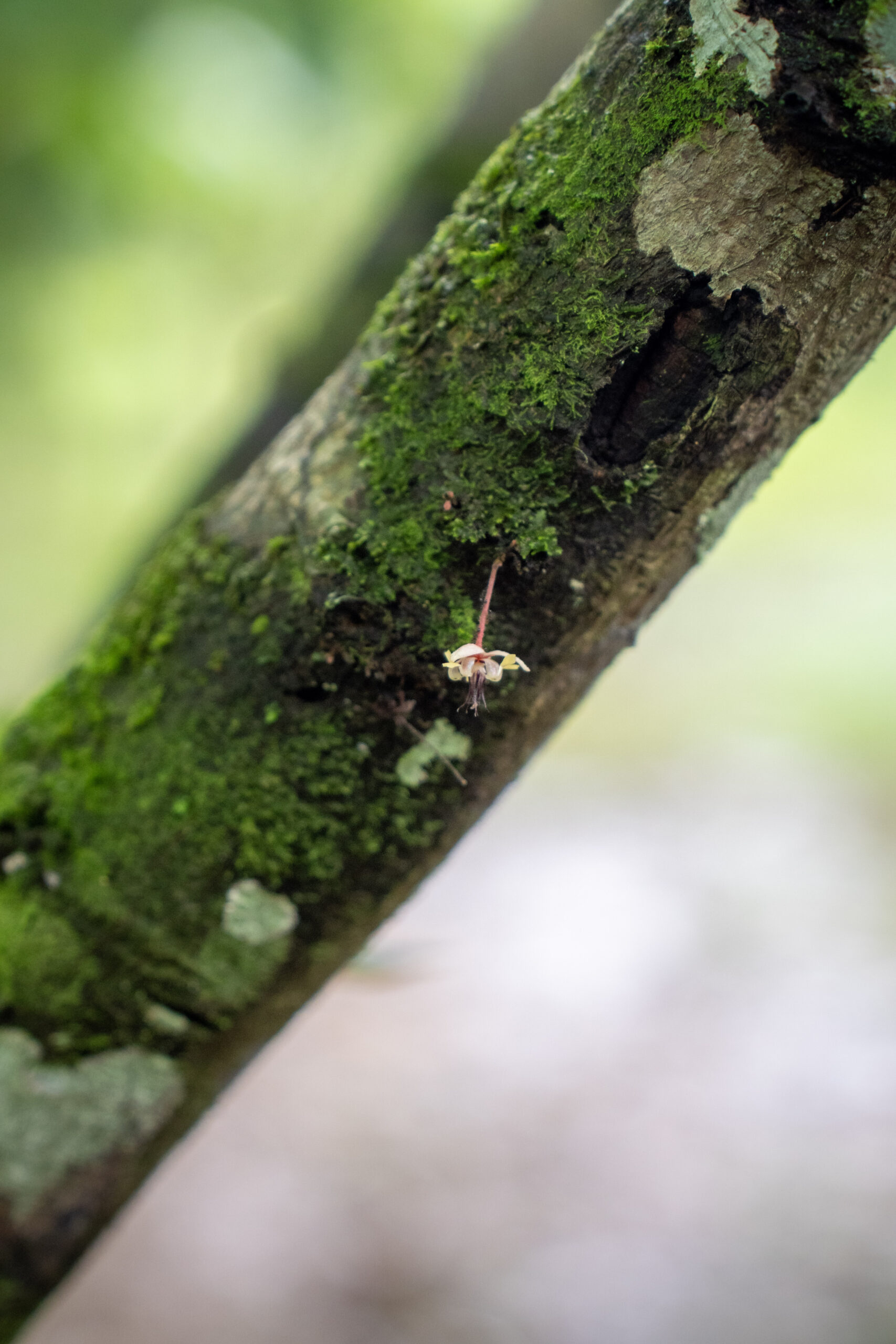
The cacao grows under a canopy of native rainforest trees in an agroforestry system, which means the soil stays alive with the microbial networks that move nutrients between root systems naturally. That biological complexity shows up in the bar.
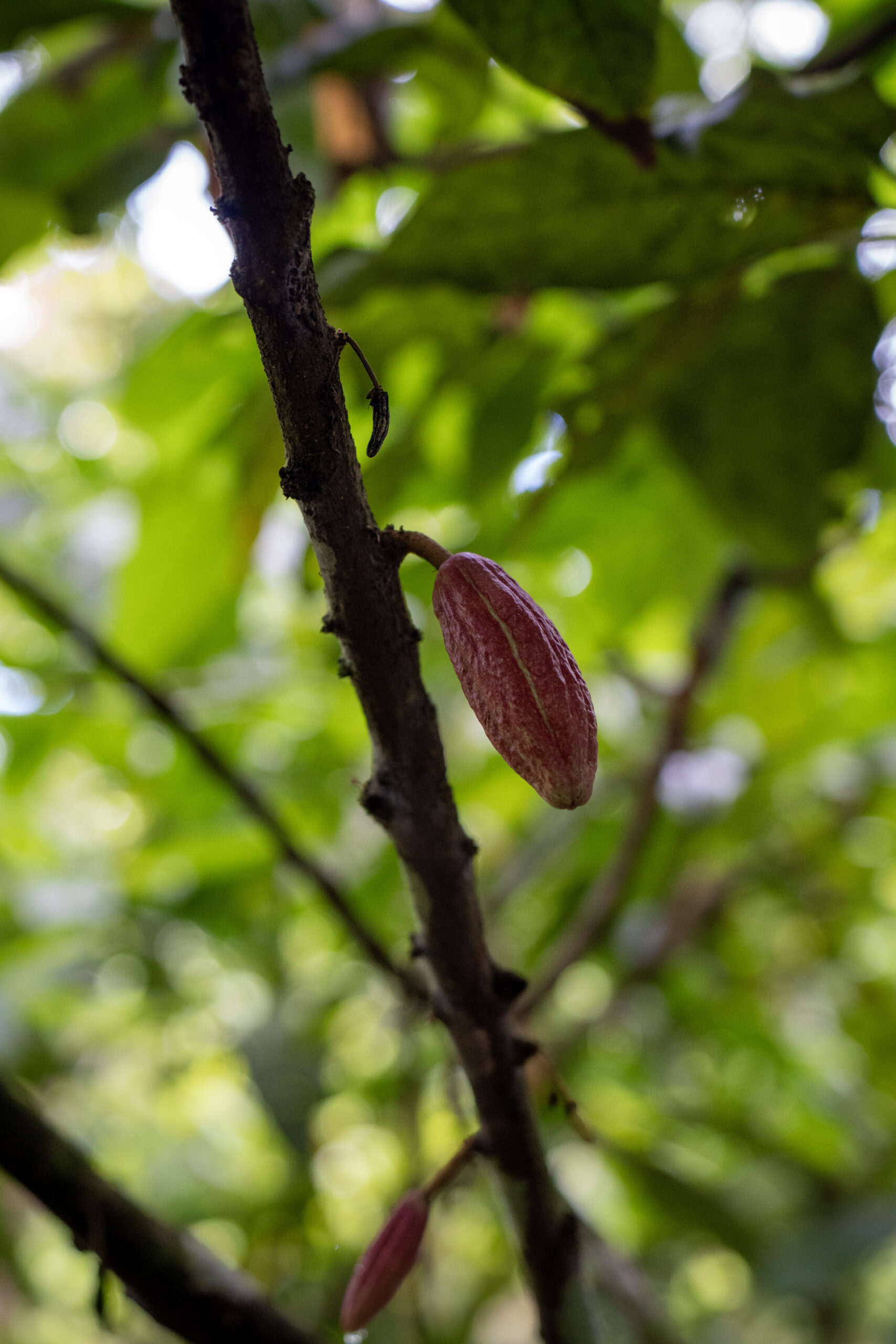
The farm carries 26 named cacao varieties – Maleku 1 through Maleku 26 – non-clonal Trinitario-lineage hybrids that exist nowhere else on earth, identified through years of observation and selection by the farm team at Llano Azul. Of these, Maleku 1 and Maleku 2 are the primary varieties driving the farm’s flavor identity going forward. Both thrive exceptionally well in the specific conditions at Llano Azul. Maleku 2 in particular produces a flavor profile that is unusually smooth even at very high cacao concentrations – where most high-percentage bars tip into harsh bitterness, Maleku 2 holds a roundness that is rare in dark chocolate. Trinitario cacao – a natural cross between the ancient Criollo and the robust Forastero – brings together the aromatic complexity and low bitterness of Criollo genetics with the hardiness and yield that make commercial farming viable. Maleku 1 and Maleku 2 carry that genetic potential and express it in a way specific to this soil, this valley, and nowhere else.
The Bean-to-Bar Process: From Pod to Wrapper
This is where most of the work is invisible to the consumer, and where most of the shortcuts happen in mass-market chocolate.
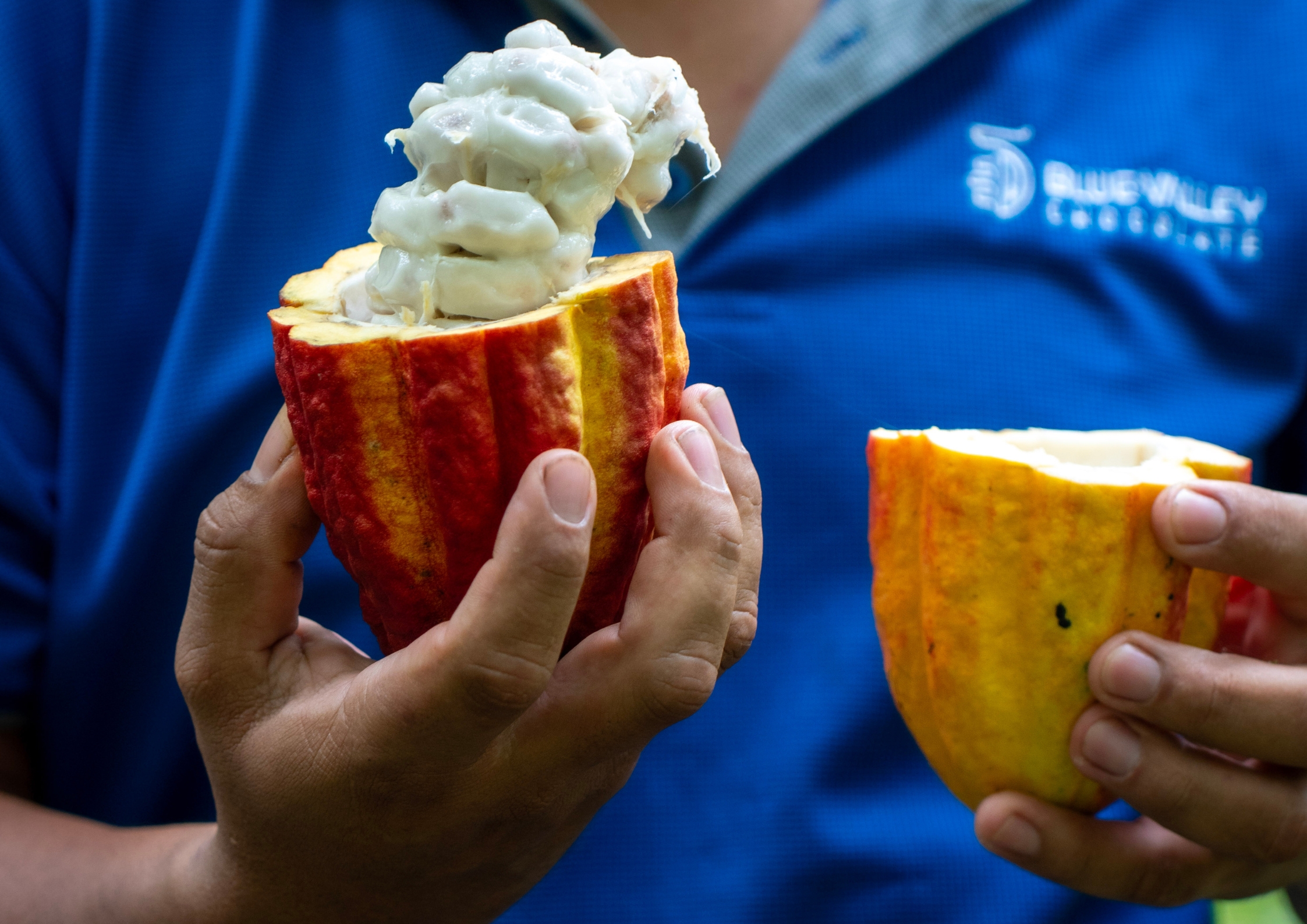
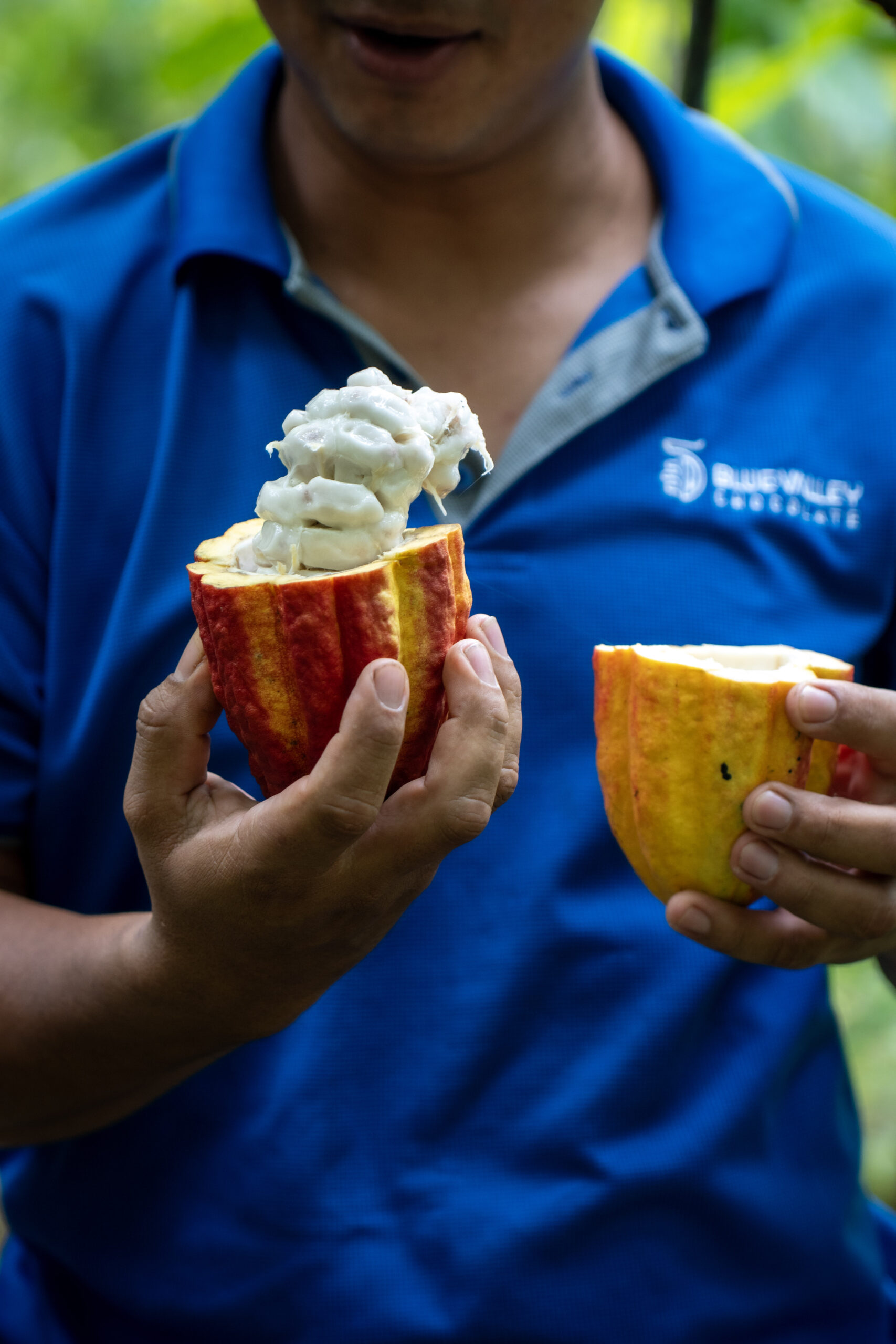
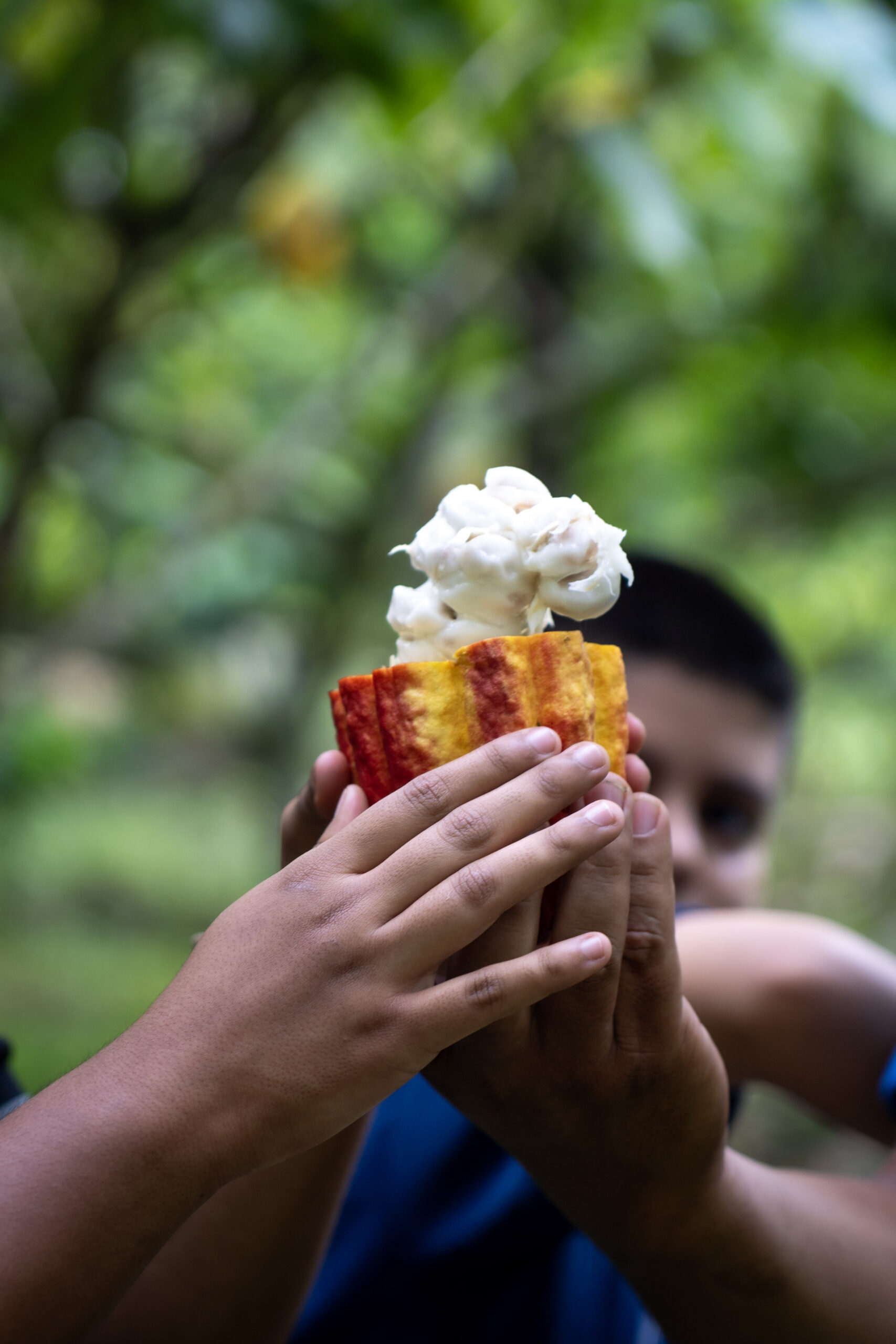
- Harvest: Cacao pods are harvested by hand every two weeks, roughly 26 times a year. Each pod is cut from the trunk or branch with a machete and split open on the spot. Inside: white, pulp-covered seeds that smell like tropical fruit and look nothing like chocolate. This is what goes into fermentation.
- Fermentation (6 days): The seeds go into wooden fermentation boxes. Over six days, the pulp breaks down through microbial activity – bacteria and yeasts convert the sugars in the cacao pulp into acids and heat that trigger a cascade of chemical reactions inside the bean. This is where the precursors to chocolate flavor are created. Get fermentation wrong, and no amount of skill downstream will rescue the bar.
- Drying (approximately 2 weeks): Fermented beans are spread in the sun to dry, reducing moisture from around 55% down to 7% or below. Drying too fast locks in harsh acidity. Drying too slowly invites mold. Done well, it stabilizes the bean and develops sweetness.
- Roasting: At the factory in Playa Brasilito, the dried beans are roasted. Temperature and time are calibrated to the specific bean – Trinitario-lineage cacao from this farm responds differently than a commodity Forastero bean. The roast develops the Maillard reaction: the same chemistry that browns bread and sears meat, generating the first layer of chocolate aroma and the familiar deep color.
- Grinding and Conching: Roasted beans are cracked and winnowed (shells removed), leaving cacao nibs. Those nibs go into a stone grinder and are ground continuously for up to 60 hours. This long grind reduces particle size until the texture becomes smooth and drives off volatile acids that would otherwise make the chocolate harsh. The result is chocolate liquor: the base of every bar.
- Tempering and Molding: Tempering is the final technical step. Chocolate contains multiple crystalline forms of cocoa butter, and only Form V produces the snap, gloss, and smooth melt of a well-made bar. Tempering means cooling the chocolate through a precise temperature sequence to encourage only Form V crystals to form. Done right, the bar snaps cleanly and melts at just below body temperature. Then it goes into molds, sets, and is wrapped by hand.
What the Process Produces
The end result of this process is a bar with no lecithin, no vanillin, no added cocoa butter beyond what is naturally in the bean. What you taste is the cacao, the fermentation decisions, and the genetics of the variety.
This is where cacao variety matters in a way most chocolate labels never explain. A 70% bar made from commodity Forastero cacao and a 70% bar made from Trinitario-lineage cacao grown in volcanic soil are not the same product – the percentage is the same but the flavor is not. The difference is in the genetic complexity of the bean, the microbial diversity of the soil it grew in, and whether the fermentation was long enough and careful enough to develop what the genetics are capable of producing.
At the higher percentages – 78%, 85% – most commercial chocolate becomes too bitter or astringent to be pleasant for many people. What makes a fine-flavor single-estate bar different at those concentrations is precisely the question of genetics and terroir. Maleku 2 cacao, grown in the specific conditions of Llano Azul, holds a smoothness and roundness at high cacao concentrations that commodity cacao simply does not. That quality is not added in the factory. It is grown into the bean.
Maleku Chocolate has earned nine international awards across the International Chocolate Awards and Costa Rica’s Feria de Chocolate – including three Gold medals. The bars range from 40% white to 85% dark.
How to Taste Chocolate Properly
Eating chocolate and tasting chocolate are different activities. If you want to experience what a single-estate bean-to-bar bar is actually doing, here is a straightforward approach.
Start with your nose. Break a small piece and hold it close before it touches your tongue. A well-made dark bar will have distinct aromas – fruit, earth, sometimes floral or nutty notes. If it smells only of generic “chocolate,” the flavor profile is likely flat.
Let it melt, do not chew. Place the piece on your tongue and resist chewing immediately. Cocoa butter melts at just below body temperature, and as it does, it releases flavor compounds in waves. The first notes – often bright, fruity, or lightly acidic – give way to mid-palate flavors (nutty, earthy, caramel) and then a finish that can last 30 seconds or more in a complex bar.
Pay attention to the finish. A good single-estate bar has a long, evolving finish. A mass-market bar tends to drop off quickly and leave almost nothing behind. The length and character of the finish tell you more about fermentation quality than anything else.
Compare percentages side by side. The shift from 70% to 78% from the same farm is not just “more bitter.” It changes the fruit character, the weight, and the texture. Tasting them together teaches you far more than either bar alone.
Drink water between samples, not milk. Milk coats the palate and mutes everything that follows.
Where to Experience it
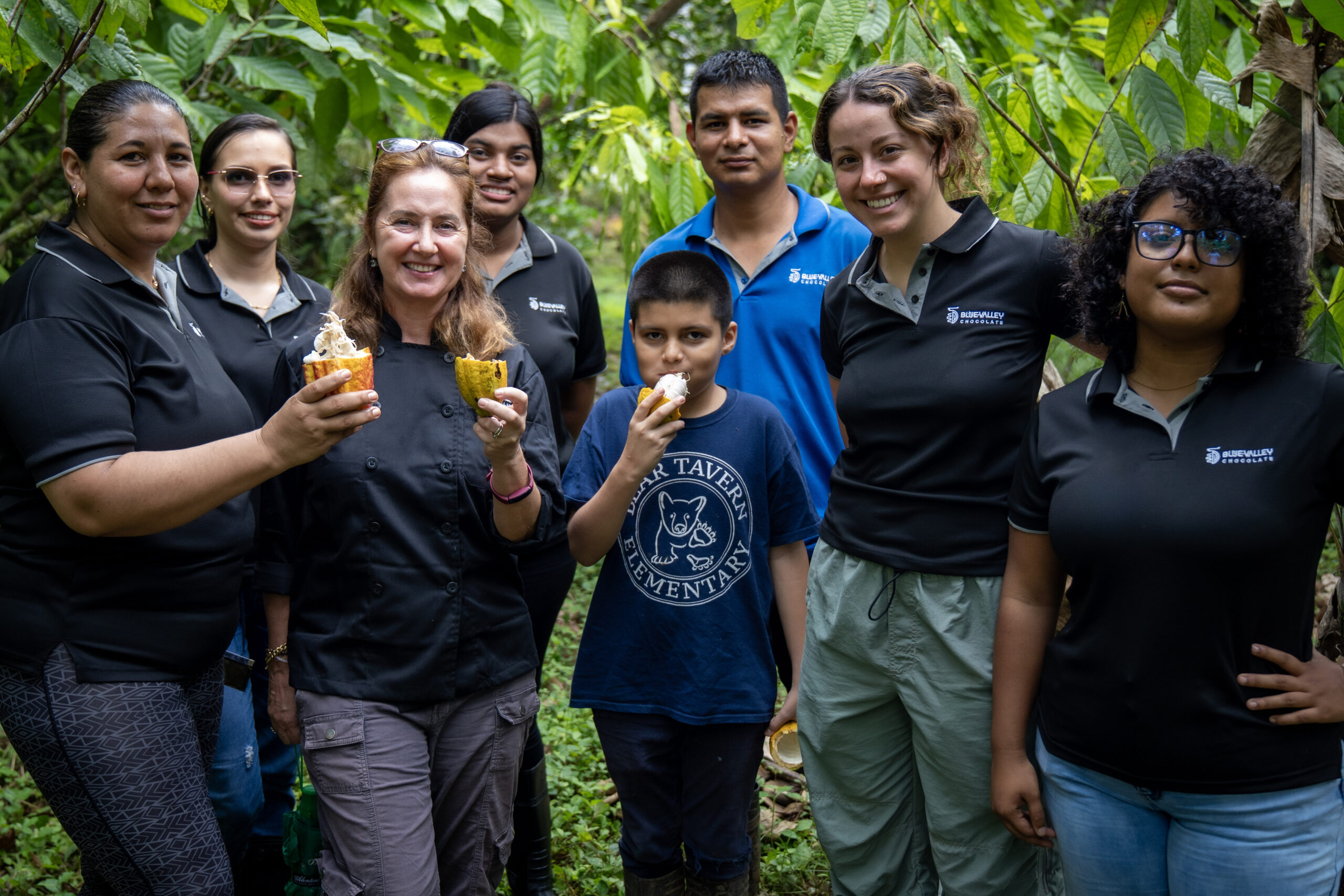
Blue Valley Chocolate runs tasting and making experiences out of the Brasilito factory, Tuesday through Friday by reservation. For travelers who plan their trips around food, experiences like these can be a meaningful way to connect with the places they visit. In fact, culinary experiences can often become some of the most memorable parts of a gastronomic trip. The Discovering Chocolate tasting (from $55 per person) walks through the full journey from raw bean to finished bar, with guided tasting at each stage, the practical application of everything in this article. The Bean-to-Bar Chocolate-Making Class ($80 per person) puts you through the roasting, grinding, tempering, and molding yourself.
Book ahead at bluevalleychocolate.com. The experiences worth having rarely have walk-in availability.
This is a guest post from Blue Valley Chocolate